
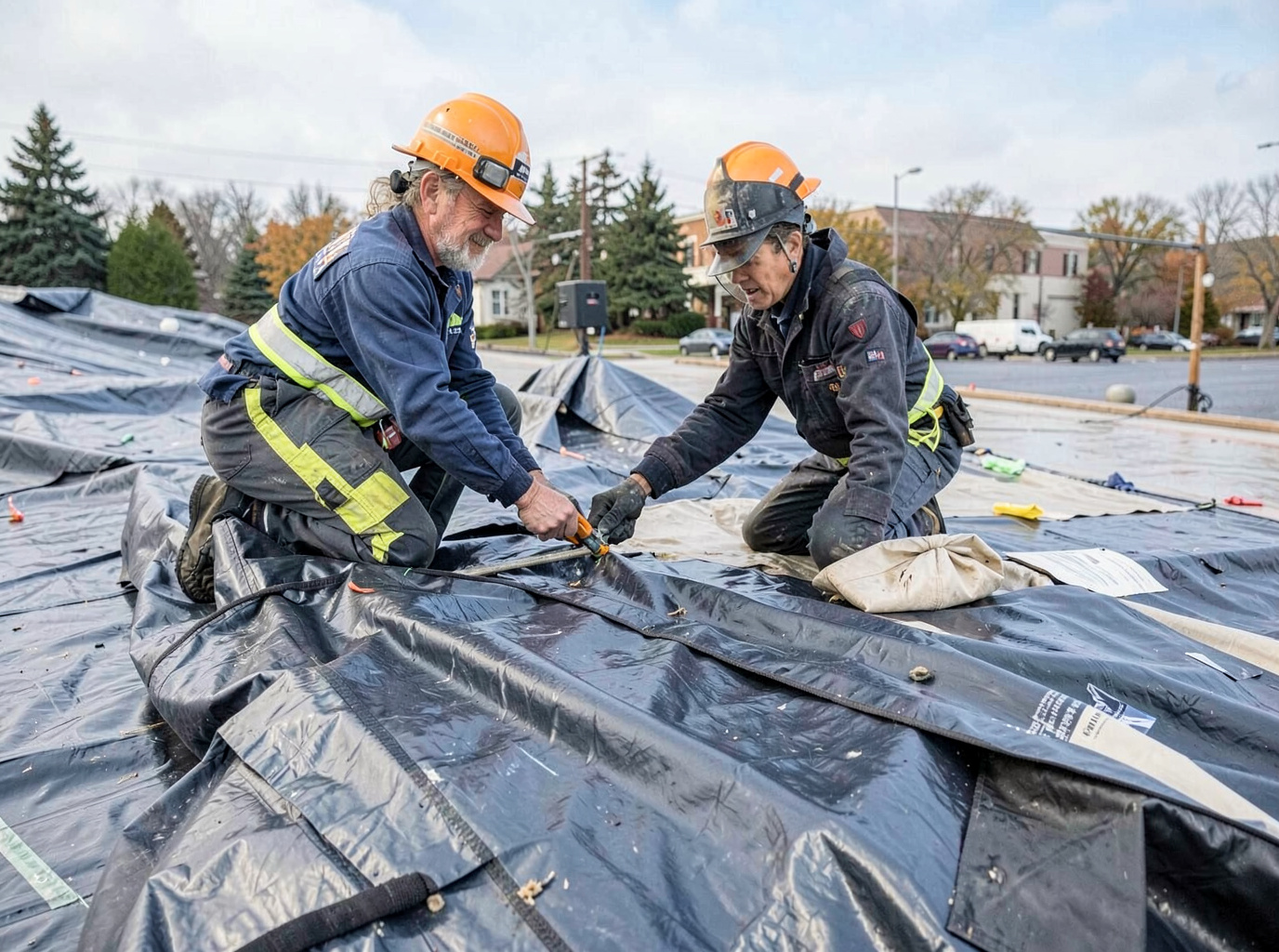
Sioux Falls experiences humid continental winters that bring heavy snow loads and ice dams, especially on older homes in McKennan Park and Augustana neighborhoods. These conditions often force water under shingles along eaves and valleys, requiring immediate tarping before interior damage spreads. Crews use reinforced polyethylene tarps secured with furring strips and screws rather than nails to avoid further shingle displacement on asphalt roofs common throughout Minnehaha County.
Wind gusts across the open terrain near Falls Park and in West Sioux frequently tear loose sections on south-facing slopes. Tarping here demands extra perimeter sealing and ballast weights because standard clips fail in sustained 40 mph winds. Access challenges appear on two-story homes in Terrace Park where narrow lots limit ladder placement and require ground-supported staging.
After tarping, crews document all attachment points for insurance adjusters and schedule permanent repairs once weather stabilizes. In East Sioux Falls and near the Old Courthouse Museum, mature trees add another layer of risk as branches can shift tarps overnight. Homeowners should avoid walking on iced roofs or attempting DIY fixes that often worsen the breach.
Service runs Monday through Friday 8am to 6pm and Saturday 9am to 2pm from the Sioux Falls base, allowing response to active leaks before they reach drywall in nearby communities like Tea and Hartford.
Technician insight
In Sioux Falls, the thing that catches most people out with Emergency Roof Tarping is how quickly ice dams refreeze under the tarp edges during our cold nights, especially on the older, steeper roofs in McKennan Park. Homeowners often try to clear snow themselves and end up pushing more water under the remaining shingles.
Ice Dam Breach on East-Facing Eave
Water was entering the attic of a 1950s home in Terrace Park after several days of freeze-thaw cycles. The crew found the dam had lifted shingles along a valley. They installed a full-eave tarp with sealed battens, stopped the interior drip, and returned the following week for permanent ice-dam mitigation once temperatures rose.
Emergency Roof Tarping Services We Offer
✓Ice Dam Emergency Tarping
Targets water backing up behind ice dams on eaves in cold Minnehaha County winters, using heat-safe tarps that prevent further interior leaks until melting occurs.
✓Storm Damage Tarping
Covers wind-torn or hail-damaged sections after severe weather, protecting exposed decks on homes in South Sioux Falls and Downtown before permanent replacement.
✓Wind Uplift Tarping
Secures lifted shingles and underlayment on exposed slopes common in open areas near the Sioux Falls Arena, using perimeter battens rated for local gusts.
✓Leak Containment Tarping
Isolates active interior leaks around chimneys and valleys in Augustana and All Saints neighborhoods to limit drywall and insulation damage.
✓Post-Inspection Temporary Covering
Applies protective tarps after initial roof assessments on older stock in Terrace Park, allowing time for material ordering and insurance review.
Emergency Roof Tarping Cost in Sioux Falls, SD
| Service | Typical Range | What Affects It |
|---|---|---|
| Single-Slope Tarping | $250–$550 | Varies with square footage and height on one-story homes in East Sioux Falls |
| Multi-Slope or Valley Tarping | $450–$900 | Higher for complex roofs in McKennan Park or two-story access needs |
| Ice Dam Perimeter Tarping | $300–$650 | Depends on eave length and current ice thickness |
| Emergency Weekend Response | $150–$300 | Added fee for Saturday calls before 2pm |
Ranges are typical for Sioux Falls, SD and confirmed with an exact written quote before any work starts.
How it works
- 1
Initial Assessment
Crew inspects roof from ground and attic, identifies breach points caused by ice or wind, and confirms safe ladder access on the specific lot.
- 2
Material Selection
Selects reinforced tarp size and attachment hardware suited to the roof pitch and current temperature in Sioux Falls.
- 3
Secure Installation
Positions tarp, fastens with furring strips and screws, seals edges, and verifies no new water paths form.
- 4
Documentation and Follow-Up
Photographs all work for insurance, provides homeowner instructions, and schedules permanent repair once weather allows.
Pricing
Upfront quote given after on-site assessment based on roof size, pitch, and access.